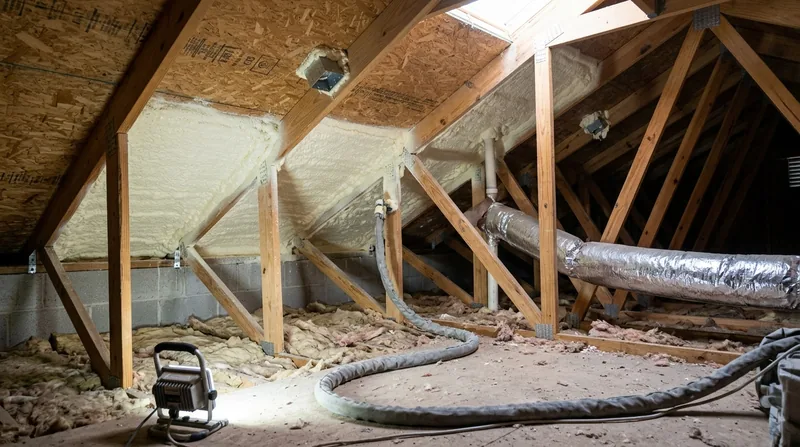




In the Rio Grande Valley, air sealing in McAllen is the single most cost-effective comfort fix a homeowner can make. The subtropical climate here pulls humid outside air through every gap in the building envelope year-round. Top plates, can lights, attic hatches, and chases leak conditioned air constantly, forcing your air handler to run harder and keeping that sticky indoor feeling that no thermostat setting will fix. Before we add insulation to an attic, we seal the leaks first. It cuts your cooling load, reduces the humid feel indoors, and is cheaper than almost any other energy improvement you can make in this climate. McAllen Spray Foam Insulation has been sealing and insulating homes across the Valley since 2012, and we know exactly where the leaks hide in the 1920s brick homes downtown, the 1960s ranches in Pharr and Weslaco, and the newer two-stories in north McAllen and Edinburg. Let us show you what a tight, sealed envelope feels like.
Why Air Sealing Matters in McAllen's Subtropical Climate
The Rio Grande Valley's heat and humidity are relentless. Nearly every home sits on a concrete slab with a vented attic above it, and that attic runs 150 to 160 degrees Fahrenheit for much of the year under some of the hottest sun in Texas. Humid Gulf air pushes inward constantly, especially during the long cooling season that runs from March through November. Unsealed gaps in your attic floor, around ductwork, and at the rim joist mean your air conditioning system is fighting a losing battle against outdoor air infiltration.
- Leaky can lights in the attic floor pull hot, humid air directly into your home.
- Top plate gaps and electrical chases let conditioned air escape and outside air enter simultaneously.
- Attic hatches and access doors are almost never sealed tight, creating a direct path for hot air to rise into living spaces.
- Ductwork in an unconditioned attic loses efficiency and pulls outside air through every loose connection.
Sealing these leaks before adding insulation means your cooling system works less, your home feels more comfortable, and your energy bills drop noticeably. It is the foundation of any attic or attic spray foam insulation project in McAllen.
Key info: A 1970s ranch in Pharr with a vented attic and loose ductwork can lose 25 to 35 percent of its cooling capacity just through air leaks. Sealing the attic floor and ductwork chases first means the new insulation actually performs as rated.
For more on the right insulation strategy for your attic, see our guide to closed cell spray foam insulation, which is often paired with air sealing for maximum results.
How We Seal Air Leaks in McAllen Homes and Buildings
Air sealing is not one size fits all. We start with a site visit to identify where air is actually leaking, then choose the right material and method for each gap. In attics, we use spray foam to seal around can lights, electrical boxes, and ductwork chases. At rim joists and band joists on older pier-and-beam homes in downtown Mission and Harlingen, we spray the entire rim to stop infiltration. In walls of pre-1950 brick homes, we inject foam into cavities without tearing out plaster. The goal is always the same: stop the leak with a material that stays sealed and does not shrink or degrade.
- We inspect the attic, crawl space, or wall to map air leaks and measure the scope of sealing needed.
- We set up containment and mechanical ventilation to manage fumes during the spray process.
- We spray closed cell or open cell foam into gaps, sealing them completely and creating an air-tight barrier.
- We allow proper cure time (24 to 48 hours) before the space is re-entered or insulation is added on top.
- We verify the seal visually and confirm the homeowner understands the re-entry window and any odor to expect during cure.
This step-by-step approach ensures every leak is sealed and the foam cures correctly, so your seal lasts for decades.
Local example: A 1960s brick ranch in San Juan with a hot west wall and a vented attic had loose can lights, missing duct insulation, and gaps around the top plate. We sealed the can lights, ductwork chases, and top plate with closed cell foam in a single visit. The homeowner reported a noticeably cooler upstairs and a 18 percent drop in summer cooling costs within two months.
To learn more about the foam types we use and when each is best, visit our page on open cell spray foam insulation and how it compares to closed cell for air sealing applications.
Air Sealing Methods and Materials
| Method | Material | Best For |
|---|---|---|
| Spray foam sealing | Closed cell or open cell polyurethane | Can lights, electrical chases, ductwork penetrations, rim joists |
| Injection foam | Closed cell polyurethane injected through small holes | Sealed wall cavities in pre-1950 brick and frame homes without demolition |
| Attic floor sealing | Open cell or closed cell foam applied as a continuous layer | Sealing the entire attic floor before blown-in or batt insulation is added |
| Rim and band joist sealing | Closed cell foam sprayed across the entire band | Pier-and-beam homes in Harlingen, Mission, and downtown areas to stop infiltration and condensation |
Air Sealing Cost in McAllen: What to Expect
Air sealing is one of the most affordable energy improvements you can make in McAllen. The cost depends on how many leaks you have, where they are, and how large an area needs to be sealed. A small attic with a few can lights and a loose hatch might cost as little as $650 to $900. A larger attic with extensive ductwork and multiple penetrations, or a full rim joist seal on a pier-and-beam home, typically runs $1,200 to $2,500. Factors that affect pricing include the size of the attic or wall, the number of penetrations to seal, access difficulty, and whether you are combining air sealing with new insulation on top.
The best way to know what your job will cost is to get a free written estimate with R-value and thickness specifications included. We respond within 24 hours and there is no obligation. Call us at (956) 540-5716 or visit our pricing page for more detail on what drives the final number.
What to Look for When Hiring an Air Sealing Contractor Near McAllen
Not all spray foam contractors are the same. Some crews spray fast and leave, with no ventilation during cure and no follow-up when the smell will not go away. Others use the wrong ratio of chemicals or do not control thickness, so the foam shrinks or fails within a few years. When you call a contractor for air sealing near McAllen, ask for a few key things to verify you are working with someone who knows the trade.
- Ask for a written estimate that includes R-value and foam thickness for each area being sealed.
- Verify that the contractor is fully insured and ask to see a current certificate of insurance.
- Confirm that mechanical ventilation will be used during the spray and cure process, and ask what the re-entry window will be.
- Ask whether the contractor will help you understand what permits or approvals your city requires for the work.
- Check references from recent jobs in McAllen, Pharr, Weslaco, or nearby cities, and ask how the foam has held up.
A contractor who takes time to inspect your space, gives you a detailed estimate, and explains the cure process is the one who will do the job right.
Ready to get started? Contact us today for a free estimate and a consultation on how air sealing can improve your home's comfort and efficiency.
Air Sealing in McAllen: Pricing Guide
| Service | Price | Details |
|---|---|---|
| Small attic air sealing | Starting at $650 | Sealing a few can lights, electrical chases, and attic hatch in a 1960s or 1970s ranch home |
| Medium attic with ductwork | Starting at $1,200 | Sealing the attic floor, can lights, ductwork chases, and top plate penetrations in a larger or newer home |
| Rim joist or band joist sealing | Starting at $1,500 | Spraying the entire rim on a pier-and-beam home in downtown Mission, Harlingen, or older neighborhoods |
| Wall injection foam retrofit | Starting at $900 | Injecting foam into sealed wall cavities in pre-1950 brick homes without interior or exterior demolition required |
| Large or complex projects | On estimate | Multi-zone sealing, commercial buildings, or metal structures require an on-site inspection before pricing |
| Free estimate and travel | No charge | Written estimate with R-value specs, response within 24 hours, no mileage fees in McAllen area |
Indicative pricing, the exact cost depends on square footage, finish, and site access. Free personalized estimate within 24h at (956) 540-5716.


