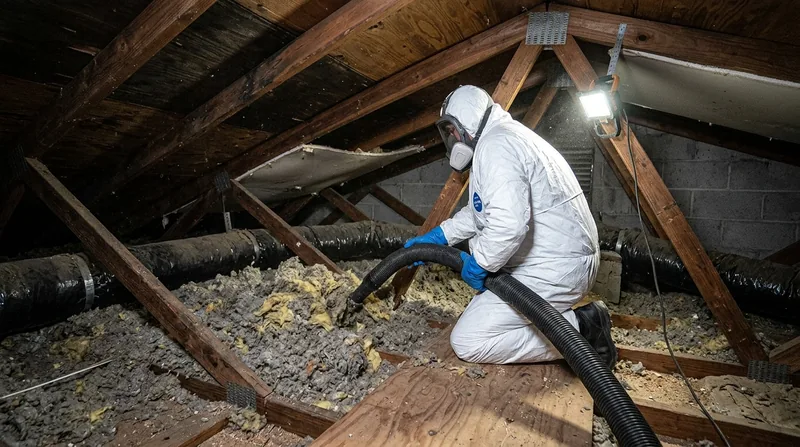




McAllen's subtropical climate and dense urban sprawl mean that old insulation fails fast. Attics under 160°F for months at a time, combined with Gulf humidity pushing moisture inward year-round, turn blown-in batts and aged fiberglass into matted, moldy, rodent-infested liabilities. When a retrofit or new foam installation is the answer, the first step is always insulation removal in McAllen. We vacuum out the failed material, flag hazards like vermiculite, and prepare a clean substrate for spray foam or new blown-in insulation. The job most installers skip is the one we handle routinely: cutting out bad spray foam, removing storm-soaked fill, and extracting rodent nests before they compromise the new work. Getting it right the first time means starting with a clean slate.
Why Insulation Removal Matters in McAllen's Hot, Humid Climate
McAllen sits in the flat Rio Grande Valley where summer attic temperatures routinely exceed 150°F and humidity stays high year-round. Old insulation packed into vented attics absorbs moisture, compacts under its own weight, and becomes a breeding ground for rodents and mold. The concrete slab construction typical of McAllen and Pharr means every home depends entirely on its attic for thermal control, making failed insulation a direct hit to energy bills and indoor comfort. Removing compromised material is not optional; it is the foundation of every retrofit that works.
- Old blown-in insulation traps moisture and loses R-value as it settles and compacts over time.
- Rodent nests, droppings, and urine-soaked batts contaminate the attic and compromise new foam adhesion.
- Storm damage and roof leaks leave insulation waterlogged and moldy, requiring complete removal before any new work starts.
- Vermiculite insulation, common in older McAllen homes built in the 1950s through 1980s, must be flagged and tested by a licensed professional before disturbance.
- Failed spray foam from previous contractors hardens into rigid chunks that block airflow and must be cut out mechanically.
Skipping removal or burying failed material under new foam is a shortcut that leads to moisture traps, poor adhesion, and callbacks. We remove the old, flag the hazards, and deliver a clean surface for the retrofit.
Key info: McAllen and surrounding areas see peak attic failure in late spring and early summer after months of 150°F+ heat and winter moisture. If your attic smells, shows dark staining, or feels soft underfoot, removal is the first diagnosis step. Call (956) 540-5716 for a free walk-through.
How We Remove Insulation: Step-by-Step Process
Removal is not demolition; it is precision work that protects your home's structure and prepares for what comes next. We use industrial-grade equipment, mechanical ventilation during the process, and a staged approach that isolates the work area and controls dust. The goal is a clean attic, a documented inventory of what came out, and a substrate ready for spray foam, blown-in cellulose, or fiberglass replacement.
- We set up containment barriers and mechanical ventilation to isolate the work area from living spaces.
- We vacuum out blown-in insulation using industrial equipment, bagging and removing it from the property.
- We hand-remove batts, roll insulation, and debris, checking for rodent activity, moisture damage, and hazardous materials.
- We flag vermiculite or other suspect materials for testing by a licensed professional before any further work.
- We inspect the attic deck, rafters, and ducts for damage, water stains, or structural issues that must be addressed before new insulation.
- We document the condition and prepare a clean, dry substrate for new foam or blown-in insulation.
The entire process is transparent, and you receive a written summary of what was removed and any issues flagged. This clarity is what separates a local shop from a fly-by crew.
Local example: A 1970s ranch in south McAllen had 14 inches of settled fiberglass and blown-in cellulose mixed together, plus evidence of past roof leaks. We removed all of it, identified two soft spots in the plywood deck (repaired by the homeowner's roofer), and delivered a clean attic ready for closed-cell foam. The job took one day, and the homeowner avoided a mold issue by acting fast.
Removal Methods and When Each One Works Best
| Method | Description | Best For |
|---|---|---|
| Vacuum extraction | Industrial vacuum with containment hose removes blown-in insulation and loose fill without disturbance. | Settled fiberglass, cellulose, mineral wool in vented attics with good deck access. |
| Hand removal and bagging | Manual extraction of batts, roll stock, and debris into labeled bags for removal and proper disposal. | Batts, fiberglass rolls, mixed materials, and tight spaces where a vacuum cannot reach. |
| Mechanical cutting and removal | Reciprocating saws and pry bars break up hardened spray foam and remove rigid chunks without damage to deck. | Failed spray foam from prior installations, polyurethane chunks, and adhesive buildup. |
| Hazard flagging and isolation | Vermiculite, asbestos-suspect materials, and contaminated fill are identified, sealed, and referred to licensed professionals. | Older homes in McAllen, Mission, and Harlingen where pre-1980s insulation may be present. |
Each method is chosen based on what failed and why. We never bury the problem; we remove it.
Insulation Removal Cost in McAllen: What to Expect
The cost of insulation removal depends on attic size, the type and volume of material to be removed, access difficulty, and whether hazardous materials are present. McAllen homes range from 1,200-square-foot 1960s ranches to 3,500-square-foot two-stories, and removal pricing scales accordingly. A typical single-story ranch attic removal starts around $950 to $1,200, while larger homes or jobs with complications can run higher. The key is understanding what moves the price up: tight access, mixed materials, rodent contamination, or the need for hazmat flagging.
We provide a written estimate with a per-board-foot range, access notes, and any flagged hazards before work begins. Never accept a removal price from a contractor who does not inspect the attic in person or who quotes without seeing the material type and volume. Our estimates are free, and we respond within 24 hours at (956) 540-5716. See our full pricing overview for detailed breakdowns and financing options.
What to Look for When Hiring an Insulation Removal Contractor Near McAllen
Not every spray foam or insulation company will remove old material. Many prefer to spray over it, bury it, or refer the job to a dumpster service. The contractor you hire must have the equipment, the crew, and the willingness to do the hard work of a clean removal. Here is how to verify any contractor, including us.
- Ask for proof of current liability insurance and request a certificate of insurance before work starts.
- Get a written estimate that breaks down the scope, the method, and any flagged hazards like vermiculite or mold.
- Confirm that the contractor has removed insulation before by asking for references and photos of completed work.
- Check whether the contractor is registered with your city if your address is in McAllen, Edinburg, or another municipality that requires contractor registration.
- Verify that removal work includes mechanical ventilation during the process and a written summary of what was removed.
- Ask whether the contractor will flag hazardous materials and refer them to licensed professionals, rather than handling them in-house.
- Confirm that the estimate is free, that the contractor will visit your attic in person, and that you can reach them if questions arise after the work.
The best contractor is the one who walks your attic, explains what needs to come out and why, and delivers a clean substrate for whatever comes next. For a free estimate and a walk-through of your attic, call us at (956) 540-5716 or request an estimate online. We serve McAllen, Pharr, Mission, Edinburg, Weslaco, and surrounding areas throughout the Rio Grande Valley, and we have been doing this work since 2012.
Insulation Removal in McAllen: Pricing Guide
| Service | Price | Details |
|---|---|---|
| Single-story attic (1,200-1,500 sq ft) | Starting at $950 | Blown-in fiberglass or cellulose removal, vacuum extraction, clean deck preparation, and written summary of materials removed |
| Two-story home with bonus room (2,000-2,500 sq ft) | Starting at $1,400 | Larger attic volume, multiple roof planes, hand removal of batts and debris, hazard flagging if vermiculite is present |
| Failed spray foam removal or mixed materials | Starting at $1,200 | Mechanical cutting of hardened foam, removal of polyurethane chunks, hand bagging of mixed insulation and contamination |
| Complex job with hazmat flagging or structural repair needed | On estimate | Vermiculite flagging, asbestos-suspect material isolation, water damage assessment, or roof deck repair coordination requires on-site inspection |
| Travel and service area | Included | No separate charge for McAllen, Pharr, Mission, Edinburg, Weslaco, Harlingen, Brownsville, and surrounding Rio Grande Valley cities |
| Free estimate | No charge | Attic walk-through, written scope, 24-hour response, no obligation to book, call (956) 540-5716 or request online |
Indicative pricing, the exact cost depends on square footage, finish, and site access. Free personalized estimate within 24h at (956) 540-5716.


