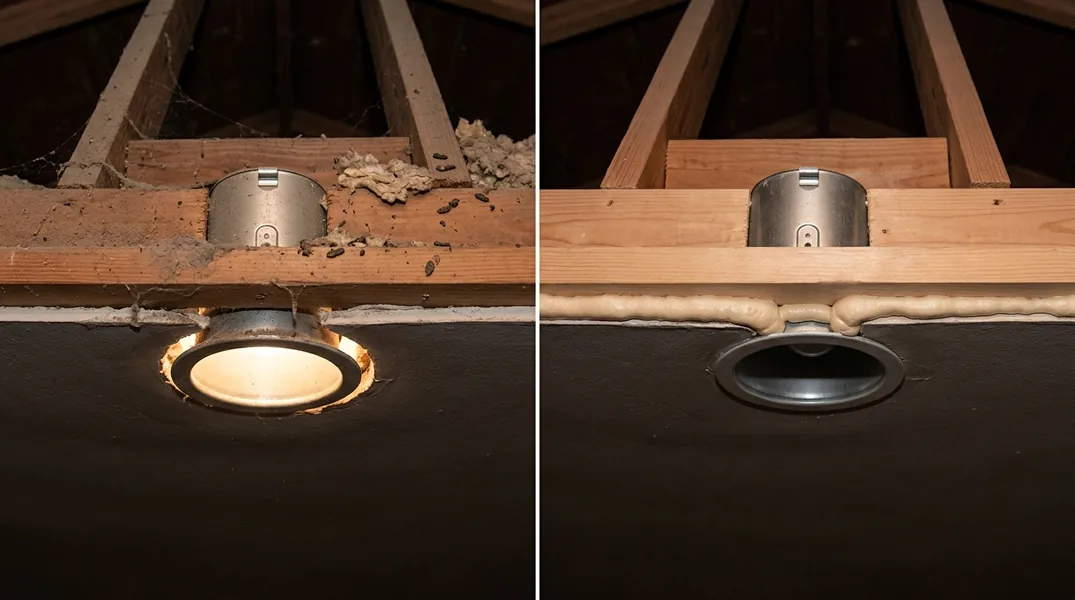
The 160-Degree Problem: Why McAllen Attics Need a Different Approach
If you own a home in McAllen, you know the Rio Grande Valley heat is relentless. Summer temperatures regularly exceed 95 degrees, and your attic can reach 160 degrees or higher on a sunny afternoon. This extreme temperature creates a unique challenge for homeowners: traditional insulation methods simply do not perform as intended when exposed to that kind of thermal stress.
Blown-in fiberglass or cellulose insulation has been the standard for decades, but it was designed with moderate climates in mind. In McAllen's environment, these materials fail to create an effective thermal or moisture barrier. They allow hot air to infiltrate the living spaces below, forcing your air conditioning to work overtime and driving up your energy bills. More importantly, the constant heat cycling and humidity in the Rio Grande Valley causes moisture problems that blown-in insulation cannot prevent. This is where Attic Spray Foam Insulation becomes the smarter choice.
How Sealed Attic Insulation Works: The Science Behind Spray Foam
Attic Spray Foam Insulation creates an air-tight seal by expanding and adhering to the roof deck, walls, and framing members. Unlike blown-in insulation, which leaves countless air gaps and voids, spray foam fills every cavity and crack. This complete seal prevents hot outside air from leaking into your attic space, which is the primary source of heat gain in most homes. When you seal the roof deck itself with spray foam, you are essentially creating a conditioned space that becomes part of your home's thermal envelope.
The key advantage in McAllen's climate is that sealed attic spray foam stops air infiltration at the source. Blown-in insulation may have a decent R-value on paper, but it cannot stop air movement. In a 160-degree attic with temperature differentials of 80 degrees or more between inside and outside, that air movement is constant and powerful. Closed Cell Spray Foam Insulation provides both insulation and an air barrier in one application, which means your air conditioning system does not have to fight a losing battle against infiltration. The result is faster cooling, lower utility bills, and more consistent comfort throughout your home.
Blown-In Insulation vs. Spray Foam: Why One Fails in Extreme Heat
Blown-in insulation works by trapping air in the material itself, relying on that trapped air to slow heat transfer. The problem is that it does nothing to stop air movement through the attic space. In a vented attic (the traditional approach), hot outside air continuously enters through soffit vents and circulates around the blown-in insulation. This air movement undermines the insulation's R-value significantly. Studies have shown that blown-in insulation in vented attics performs at only 50 to 70 percent of its rated value under real-world conditions, especially in hot climates where temperature differentials are extreme.
Additionally, blown-in insulation is highly susceptible to moisture problems in humid climates like the Rio Grande Valley. As hot, humid outside air enters the vented attic, it can condense on cooler surfaces, creating an ideal environment for mold growth and wood rot. Spray foam, by contrast, does not absorb moisture and creates a vapor barrier that prevents moisture from entering the attic in the first place. When you seal the roof deck with spray foam, you eliminate the vented attic problem entirely. Your attic becomes a sealed, conditioned space that maintains stable temperature and humidity levels year-round.
Energy Savings and Comfort: What McAllen Homeowners Actually Experience
Homeowners who switch from blown-in insulation to sealed attic spray foam typically see measurable improvements in both comfort and energy costs. Because spray foam eliminates air leaks and creates a true thermal barrier, your air conditioning system reaches the desired temperature faster and maintains it with less cycling. This translates to lower energy consumption, which shows up immediately on your utility bills. In McAllen's hot season, which runs from May through October, the savings can be substantial for a typical household.
Beyond the dollars, homeowners report noticeably better comfort. Rooms that were previously hot spots or hard to cool become more consistent. There are fewer temperature swings between day and night, and the home feels more stable even during peak afternoon heat. The sealed attic also means your HVAC system lasts longer because it is not being overworked. Reduced runtime extends the life of your air conditioning equipment and lowers maintenance costs over time. When you factor in the long-term durability of spray foam (it does not settle, compress, or degrade like blown-in materials), the return on investment becomes even clearer.
Attic Spray Foam Insulation Cost in McAllen: What to Budget
The upfront cost of spray foam is higher than blown-in insulation, and that is an honest starting point in any conversation about pricing. However, comparing the two based on initial cost alone misses the bigger financial picture. Spray foam is a permanent solution that does not settle, does not need to be replaced, and performs consistently for 30+ years. Blown-in insulation, by contrast, settles over time, loses effectiveness, and may need to be topped up or replaced within 15 to 20 years. When you spread the cost of spray foam over its lifespan and factor in the energy savings, the true cost per year is significantly lower.
The best way to understand what your specific project will cost is to request a free estimate from McAllen Spray Foam Insulation. Every attic is different, and the final price depends on square footage, existing conditions, and the specific type of spray foam recommended for your home. Call (956) 540-5716 to schedule a consultation with a spray foam expert who can walk you through the options, explain the long-term value, and provide a transparent quote. There are no hidden fees or pressure tactics, just honest advice about what will work best for your home and budget.
Choosing the Right Spray Foam: Closed Cell vs. Open Cell for Rio Grande Valley Homes
Closed Cell Spray Foam Insulation is the preferred choice for attic applications in McAllen because it provides superior moisture resistance, higher R-value per inch, and excellent air sealing properties. Closed cell foam has a higher density and creates a vapor barrier that protects against the humidity and moisture challenges of the Rio Grande Valley. It is also more rigid, which adds structural strength to the roof deck and helps it withstand the thermal stress of extreme temperature swings.
Open Cell Spray Foam Insulation is sometimes used in cooler climates where moisture is less of a concern, but it is not ideal for attics in McAllen. Open cell foam is more permeable to moisture and does not provide the same level of vapor barrier protection. In a climate where humidity is high and seasonal temperature swings are extreme, closed cell foam delivers better long-term performance and peace of mind. Your spray foam contractor can assess your specific attic conditions and recommend the best option, but for most Rio Grande Valley homeowners, closed cell is the superior choice for sealed attic insulation.
Looking for a professional spray foam insulation contractor in McAllen? McAllen Spray Foam Insulation responds fast for all your spray foam insulation needs.
Get a Free Quote