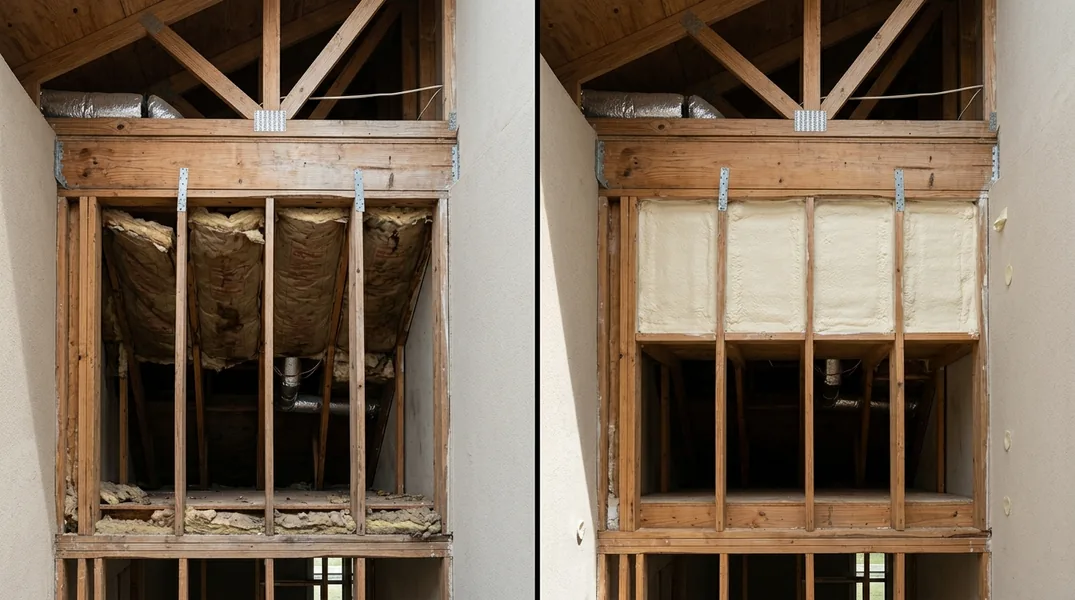
Is Spray Foam Insulation Worth It? The Honest Answer
Homeowners in McAllen often ask whether spray foam insulation is truly worth the investment. The answer depends on your specific situation, budget, and long-term goals for your home. Spray foam insulation offers some genuinely compelling advantages, particularly in the hot, humid climate of South Texas where cooling costs can run high year-round.
The primary value proposition of spray foam is its superior air-sealing capability and high R-value per inch. Unlike traditional fiberglass batts or blown cellulose, spray foam expands to fill every crack, crevice, and gap in your attic or walls. This means fewer air leaks, less conditioned air escaping, and lower energy bills. For Attic Spray Foam Insulation, this translates to real savings during the brutal summer months when your air conditioning system works overtime.
However, the upfront cost is higher than conventional insulation, and the installation requires certified professionals. The decision to invest in spray foam should factor in how long you plan to stay in your home, your current energy costs, and whether you qualify for any energy efficiency rebates or tax credits. For many homeowners in McAllen, the long-term energy savings and improved comfort justify the initial expense.
Is Spray Foam Insulation Safe? What You Need to Know
Safety is a legitimate concern when considering spray foam insulation, and homeowners deserve straight answers. The good news is that spray foam insulation is safe when installed correctly by trained professionals and given adequate curing time. The process does involve chemicals, but the risks are manageable with proper installation practices.
During installation, your home should be evacuated, and the spray foam crew must follow strict safety protocols. The two-part chemical mixture (isocyanate and polyol resin) is applied under pressure and expands rapidly. While the chemicals are hazardous during application, they undergo a chemical reaction that transforms them into inert foam once cured. Professional installers wear protective equipment, ensure proper ventilation, and follow EPA and manufacturer guidelines to minimize exposure risks.
The critical factor is choosing a licensed, experienced contractor. McAllen Spray Foam Insulation follows all safety regulations and best practices to ensure your installation is done right. Our team understands the local climate and building codes, and we prioritize your family's safety throughout the entire process. When you work with a reputable local company, the safety concerns that dominate online forums are largely eliminated through proper technique and professional standards.
Understanding Spray Foam Off Gassing and Curing Times
One of the most discussed safety topics is spray foam off gassing, which occurs when the foam releases volatile organic compounds (VOCs) during and after the curing process. This is a real phenomenon, but it's important to understand the timeline and how to manage it properly. Immediately after installation, the foam does emit odors and VOCs, which is why your home must be vacated during application and for a period afterward.
The curing timeline typically spans 24 to 48 hours, during which the foam hardens and the chemical off gassing decreases significantly. Most of the off gassing occurs in the first 24 hours. After 48 hours, the foam is largely cured, and VOC emissions drop dramatically. You can usually re-enter your home after 24 hours, though some families prefer to stay away longer for extra caution, especially those with young children, elderly members, or respiratory sensitivities.
To minimize off gassing concerns, ensure your installer opens windows and doors after application to allow ventilation. If your attic is sealed (which is common with spray foam installations), proper ventilation pathways should be maintained. Some homeowners choose Open Cell Spray Foam Insulation over closed cell specifically because it allows for better air exchange and may have slightly lower off gassing in some cases, though both types are safe when properly installed. Always discuss curing protocols with your contractor before the work begins.
Spray Foam Insulation Pros and Cons: A Balanced Look
Understanding both the advantages and disadvantages of spray foam helps you make an informed decision for your McAllen home. On the positive side, spray foam delivers exceptional air sealing, which is crucial in our hot climate where keeping cool air inside directly impacts your utility bills. It also resists moisture, provides structural support to walls, and lasts for decades without settling or losing R-value like traditional insulation can. The air-sealing properties also improve indoor air quality by reducing outdoor pollutants and humidity infiltration.
The cons are worth acknowledging as well. The initial cost is higher, typically two to three times more expensive than fiberglass insulation. Installation requires professional application, so DIY is not an option. In rare cases, improper installation can trap moisture, leading to mold issues, though this is uncommon with experienced contractors. Some people have concerns about the chemical composition, though as discussed, properly installed foam is safe. Additionally, if you ever need to add wiring or plumbing in an insulated wall, you'll need to cut through the foam, which can be messier than dealing with traditional insulation.
For most homeowners in McAllen, the pros outweigh the cons, especially if you plan to stay in your home long enough to recoup the investment through energy savings. The comfort improvements alone, such as fewer drafts and more consistent temperatures, often make the upgrade worthwhile beyond just the financial calculation.
Spray Foam Insulation Problems: When Things Go Wrong
While spray foam insulation is generally safe and effective, problems can occur if installation is not done properly. The most common issues stem from improper application, inadequate ventilation planning, or moisture management failures. Understanding these potential problems helps you know what to look for when hiring a contractor and what questions to ask during the consultation.
One issue that occasionally surfaces is moisture accumulation in walls or attics if the foam is applied in a way that traps moisture without proper ventilation pathways. This can lead to mold growth over time. Another problem occurs when the foam is applied too thickly or unevenly, creating areas of poor insulation or structural stress. In some cases, homeowners report difficulty with future renovations because cutting through cured foam is challenging and can be messy. Additionally, if the wrong type of foam is chosen for your application, you might end up with inadequate performance or unnecessary expense.
These problems are almost entirely preventable by working with experienced professionals who understand your specific situation. When you choose McAllen Spray Foam Insulation, we conduct a thorough assessment of your attic or walls, recommend the appropriate foam type (whether Closed Cell Spray Foam Insulation or open cell), and ensure proper installation with attention to ventilation and moisture control. Our team has served Pharr, Mission, Edinburg, and surrounding areas, and we understand the local climate challenges that affect insulation performance.
Spray Foam Insulation Cost in McAllen: What to Budget
Cost is a major factor in the spray foam decision, and it's important to understand what you're paying for and how to compare quotes fairly. Pricing for spray foam insulation varies based on the area to be insulated, the type of foam chosen, and the complexity of the project. Attic insulation typically costs more per square foot than wall insulation, and closed cell foam costs more than open cell because it provides a higher R-value per inch and offers additional benefits like structural support and moisture resistance.
In McAllen, you can expect to pay anywhere from $1.50 to $3.50 per board foot for spray foam insulation, depending on these factors. A typical 1,500 square foot attic might cost between $3,000 and $7,000 to insulate, whereas smaller projects or wall insulation could range from $1,500 to $5,000. While this is more than traditional insulation, remember that spray foam typically lasts the lifetime of your home, doesn't settle, and delivers energy savings year after year in our hot climate.
To get an accurate picture of what your project will cost, reach out to McAllen Spray Foam Insulation for a free estimate. We'll evaluate your specific needs, discuss your budget, and explain how the investment pays for itself through reduced energy bills. You can also call us at (956) 540-5716 to discuss your project and ask any questions about pricing or our services.
Looking for a professional spray foam insulation contractor in McAllen? McAllen Spray Foam Insulation responds fast for all your spray foam insulation needs.
Get a Free Quote